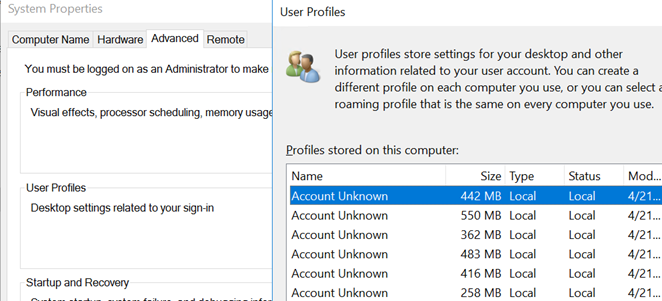
Free Up C Drive Space by Removing Ghost User Profiles “Account Unknown'” in Windows Server.

Introduction In our daily IT operations or through routine monitoring, we often encounter alerts like “C: Drive is low on space.” While it’s common practice for IT teams to clean up temporary files, logs, caches, and unused applications, these efforts don’t always resolve the issue. When cleanups fall short, a request for C:\ drive expansion … Read more

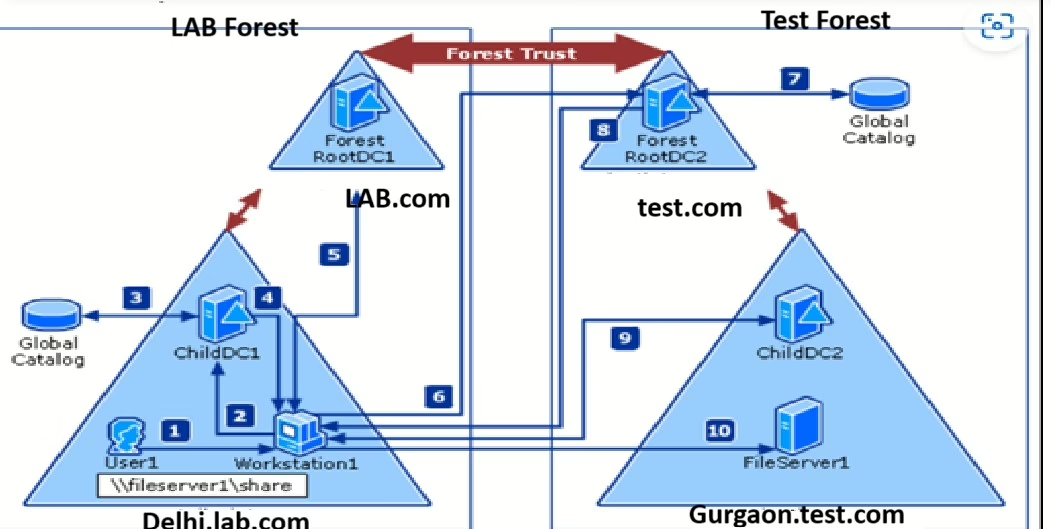
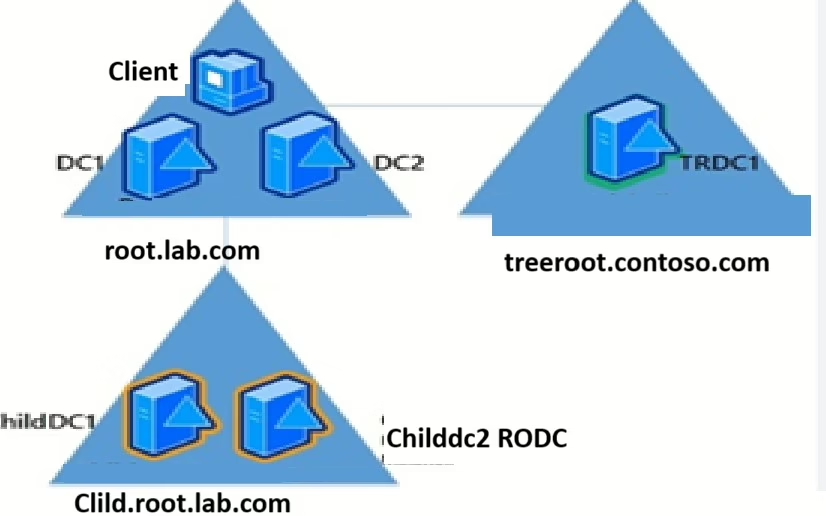
Active Directory Trusts Explained: Forest & External Trusts (Lab.com vs Test.com)

In this article, I have cover everything about Active Directory (AD) Trusts — why they are created, the different types of AD Trusts with examples, their purposes, requirements, and the step-by-step process to create them. Why Do We Create Active Directory Trusts? Creating an Active Directory (AD) trust allows two or more AD domains or … Read more

Troubleshooting Domain Controller Connectivity Issues for Junior Engineers!

Introduction Whether you’re just starting your career in IT or already providing support for Active Directory (AD), troubleshooting domain controller connectivity issues is always a challenge. When something goes wrong in AD, it can trigger a wide range of problems—like users being unable to log in, Group Policies not applying, or authentication failures. Unfortunately, even … Read more

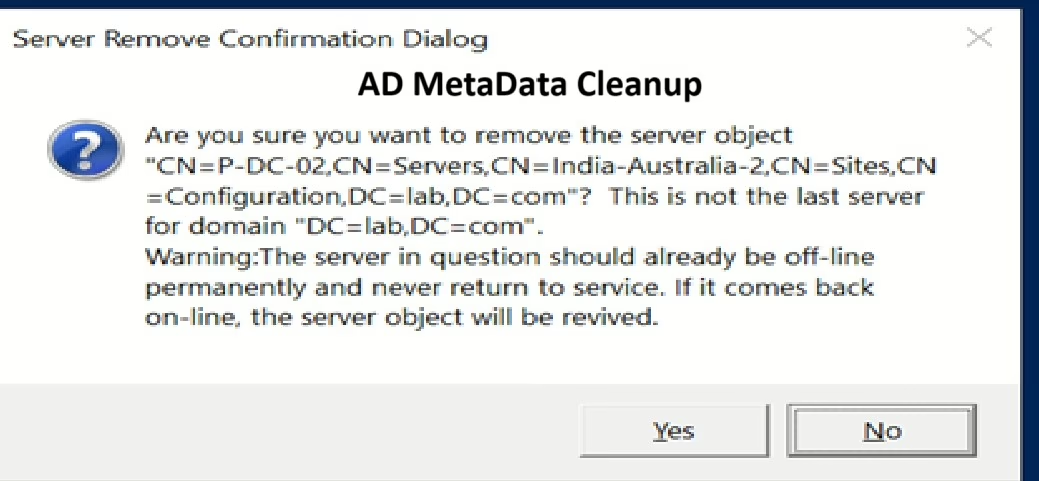
How to Troubleshoot Active Directory Replication and Domain Controller Health

In any Windows-based environment setup, Active Directory (AD) is the core system for managing user identity, access, and login authentication. To keep AD environment running smoothly, two things are very important: replication and the health of Domain Controllers (DCs). If replication fails or DCs are not set up properly, it can cause problems like inconsistent … Read more

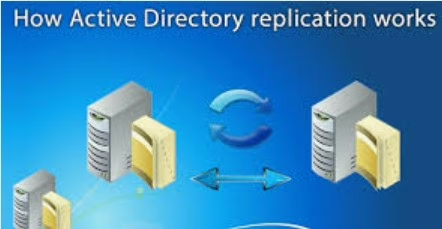
Active Directory Replication Overview

 When it comes to an Active Directory environment, AD replication is important and critical. Changes made on one domain controller are replicated across other domain controllers, either within the same AD forest or domain. This process is important for maintaining consistency in user data (attributes), group policies, and other directory objects throughout the organization’s network. … Read more

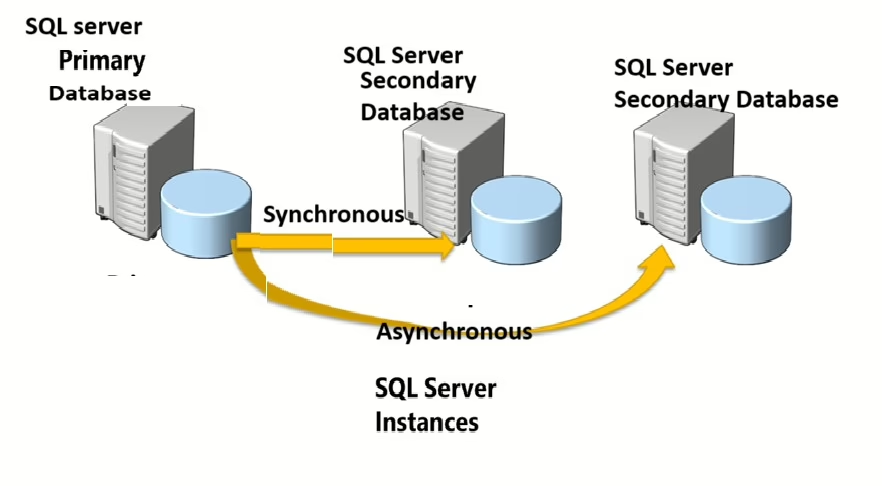
Always On Availability Groups (AG) in SQL Server: Ensuring High Availability and Disaster Recovery

Introduction Always On Availability Groups (AG) is a high-availability and disaster recovery (HADR) solution in Microsoft SQL Server. It ensures database protection by replicating data across multiple SQL Server instances, providing failover capabilities, and maintaining continuous availability. This feature is ideal for mission-critical applications that require minimal downtime and seamless recovery.  Breakdown of the architecture … Read more

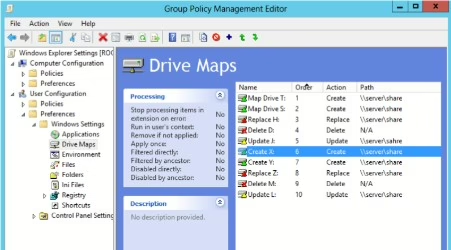
Understanding Group Policy Preferences (GPP)

Introduction Group Policy Preferences (GPP) are a powerful feature in Windows that allow administrators to configure various settings for users and computers in a Windows domain. Unlike regular Group Policy settings, Preferences provide a more user-friendly and flexible way to manage configurations. This article explains what GPP is, how to use it, and the differences … Read more

Comprehensive Beginner’s Guide to DNS (Domain Name System)

Introduction In today’s digital age, the internet is an important part of our daily lives. From searching for information to shopping, communicating, and streaming, the internet is our go-to tool. But have you ever wondered how your device knows exactly where to find the websites you visit? The answer lies in the Domain Name System … Read more

Understanding RAID Levels: Performance, Redundancy, and Use Cases

Introduction In today’s digital world, storing data is crucial for everyone, whether you’re an individual or a business. As the volume of data increases, ensuring its safety, accessibility, and speed becomes critically important. One of the most common ways to manage data efficiently is through RAID (Redundant Array of Independent Disks) technology. RAID combines multiple … Read more