Microsoft Security Advisory for Kerberos Hardening on Domain Controllers (CVE-2026-20833)
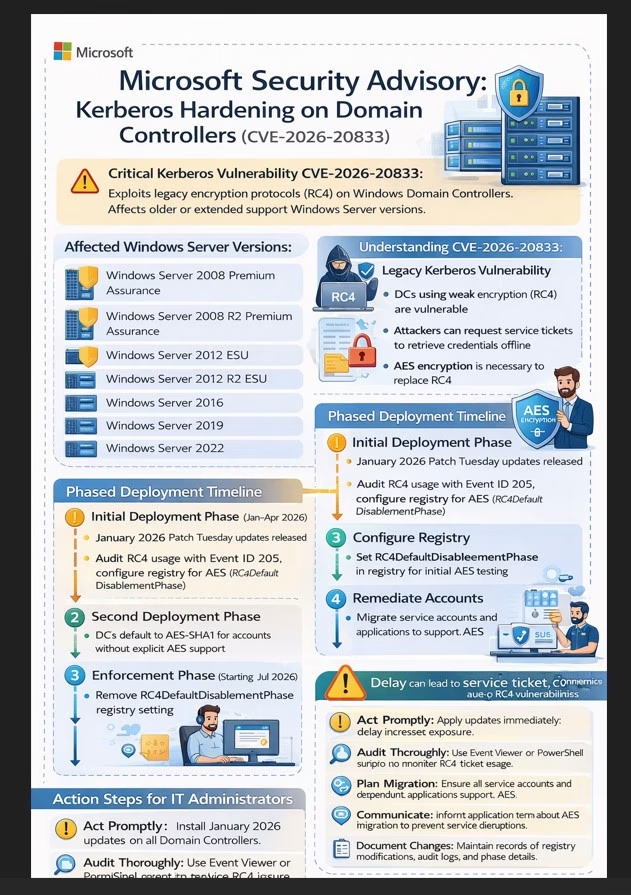
Microsoft has issued a critical advisory for IT administrators managing Windows Domain Controllers (DCs), targeting the mitigation of CVE-2026-20833, a Kerberos vulnerability that exposes legacy encryption protocols like RC4. This vulnerability allows attackers to request service tickets and potentially compromise service account credentials, particularly on DCs running older or extended support versions of Windows Server. … Read more
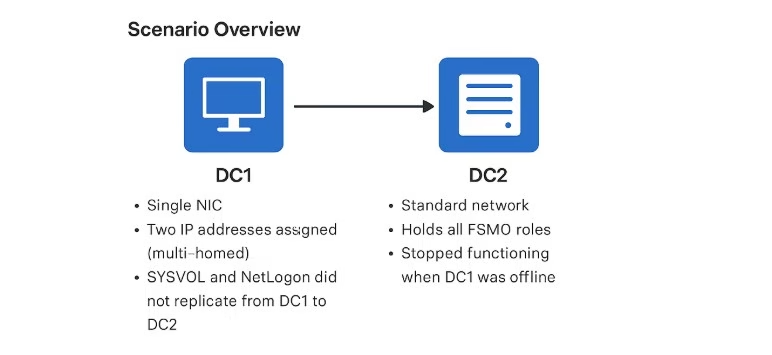
How to Fix SYSVOL & NetLogon Replication Failure Between Windows Server 2019 Domain Controllers

When SYSVOL or NetLogon stops replicating between domain controllers, Active Directory becomes unstable very quickly.Group Policies fail to apply, users cannot authenticate, DNS breaks, and your secondary domain controller may stop functioning as soon as DC1 goes offline. This issue is extremely common in IT environments, so in this article I am sharing a real-world … Read more

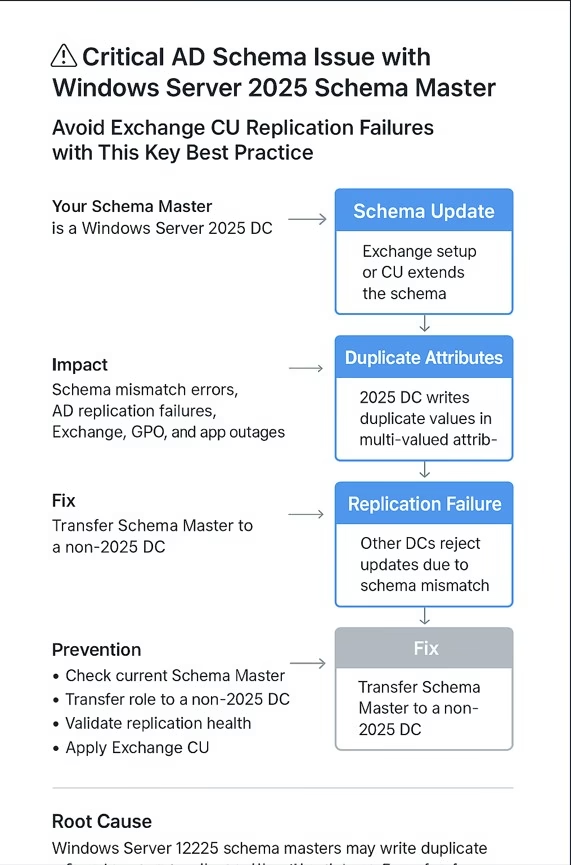
Active Directory Replication Risk: Schema Master on Windows Server 2025 During Exchange Updates

Flowchart showing how Windows Server 2025 Schema Master causes Active Directory replication issues during Exchange CU schema update and steps to fix it

📌 Introduction When planning or applying Exchange cumulative updates (CUs) — such as Exchange 2019 CU15 or Exchange SE RTM — there is a significant but often overlooked risk that can disrupt your on‑premises Active Directory replication. This issue specifically arises when the Schema Master FSMO role is held by a Windows Server 2025 domain controller. … Read more

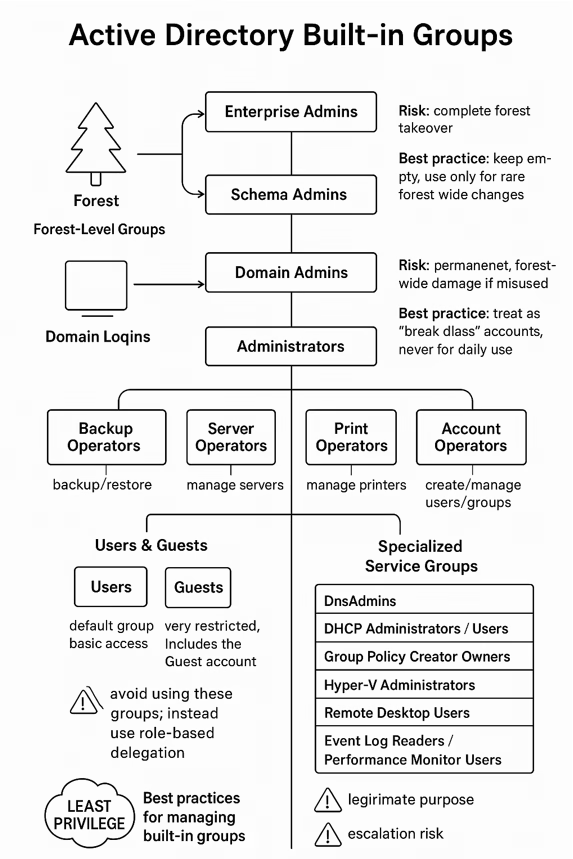
Active Directory Built-in Groups Accounts: Power, Risks, and Best Practices

Introduction Most AD administrators are already familiar with the pros and cons of the built-in Administrator account in Active Directory. I’m simply trying to explore and understand it more clearly using diagrams and articles. Active Directory (AD) is the backbone of identity and access management in most enterprises. To simplify administration, Microsoft provides a number … Read more

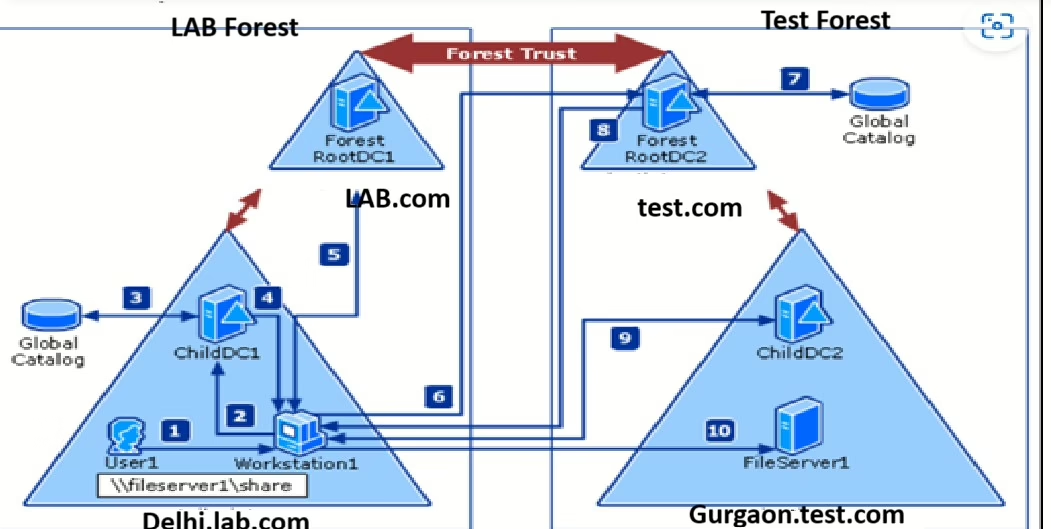
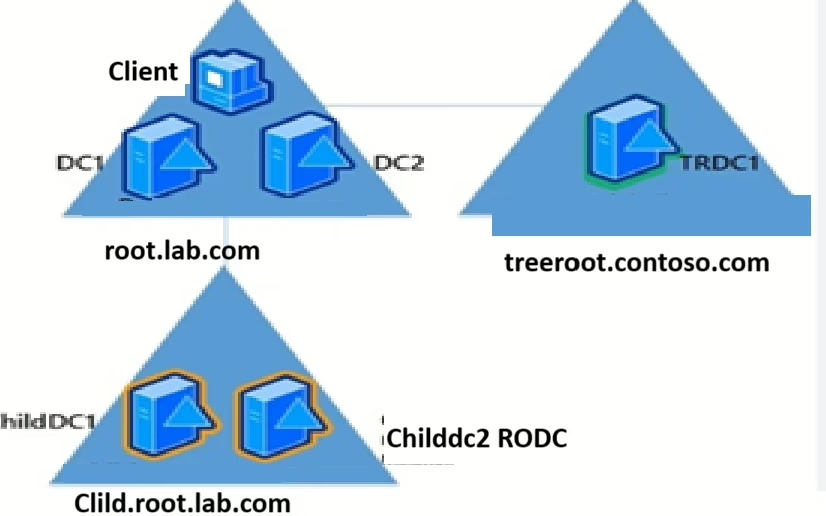
Active Directory Trusts Explained: Forest & External Trusts (Lab.com vs Test.com)

In this article, I have cover everything about Active Directory (AD) Trusts — why they are created, the different types of AD Trusts with examples, their purposes, requirements, and the step-by-step process to create them. Why Do We Create Active Directory Trusts? Creating an Active Directory (AD) trust allows two or more AD domains or … Read more

Troubleshooting Domain Controller Connectivity Issues for Junior Engineers!

Introduction Whether you’re just starting your career in IT or already providing support for Active Directory (AD), troubleshooting domain controller connectivity issues is always a challenge. When something goes wrong in AD, it can trigger a wide range of problems—like users being unable to log in, Group Policies not applying, or authentication failures. Unfortunately, even … Read more

How to Troubleshoot Active Directory Replication and Domain Controller Health

In any Windows-based environment setup, Active Directory (AD) is the core system for managing user identity, access, and login authentication. To keep AD environment running smoothly, two things are very important: replication and the health of Domain Controllers (DCs). If replication fails or DCs are not set up properly, it can cause problems like inconsistent … Read more

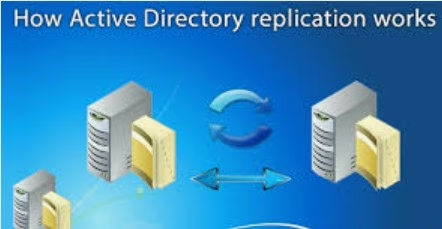
Active Directory Replication Overview

 When it comes to an Active Directory environment, AD replication is important and critical. Changes made on one domain controller are replicated across other domain controllers, either within the same AD forest or domain. This process is important for maintaining consistency in user data (attributes), group policies, and other directory objects throughout the organization’s network. … Read more